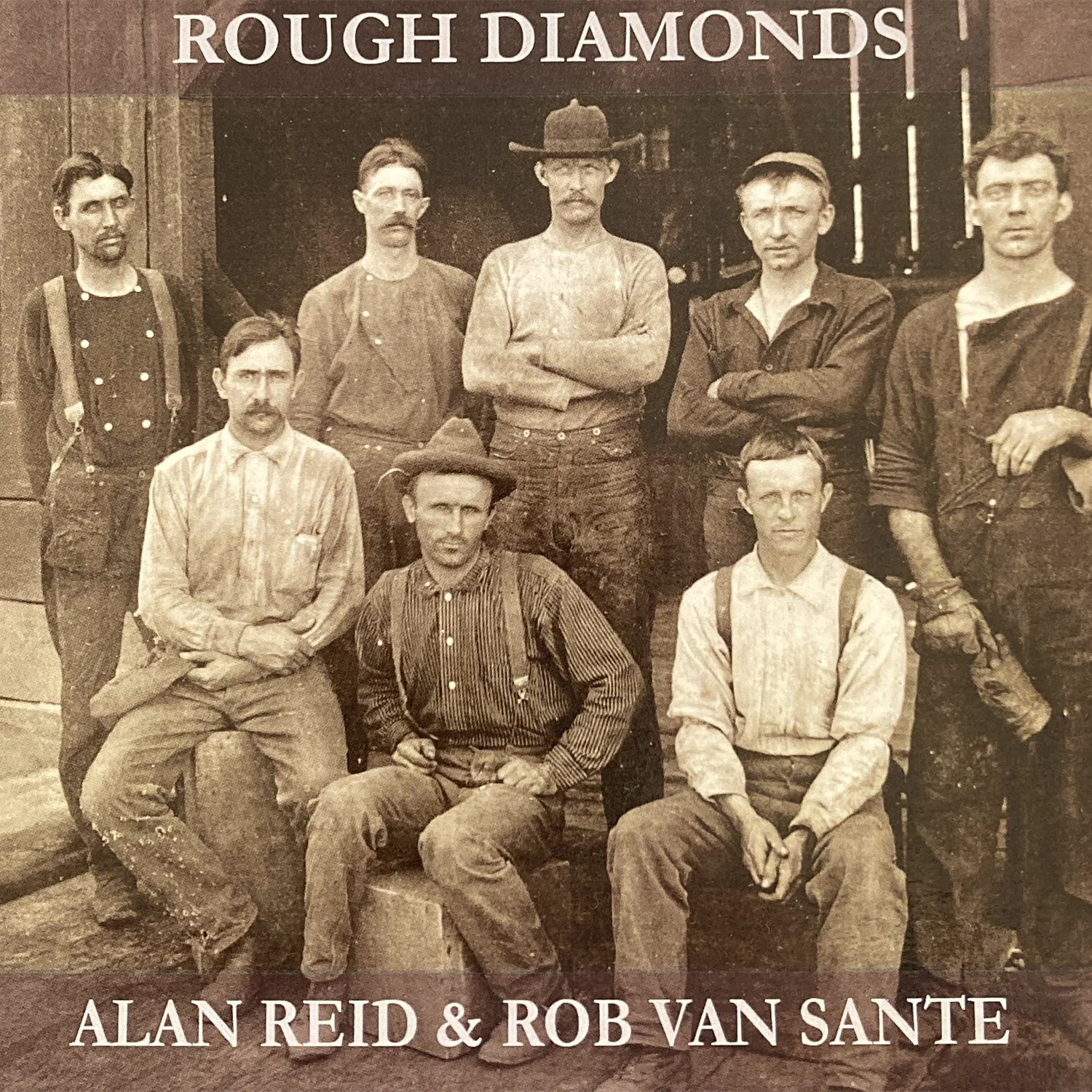
Rough Diamonds
ROUGH DIAMONDS looks back at the once thriving Lothian coal industry. Various pit names are mentioned as well as the ‘Nancy Teuch’, a local public pathway. PASSING PLACES, from veteran prolific songwriter John Conolly (of ‘Fiddlers Green’ fame), relates his visit to the island of Mull, exploring his roots. The town of Wick in the far north of Scotland gained wealth in the 19th. century from herring (silver darlings) and whisky. The herring are much declined but the local ‘Old Pulteney’ distillery still thrives, sending out its BARRELS OF GOLD. ALBERT BERRY is our interpretation of Ted Edwards’ imaginary dialogue between a miner and the vengeful coal. CARRADALE is a charming village on the east side of the Mull of Kintyre, facing the west coast of the island of Arran. This song relates a journey from the big city whereby cares and stress melt away. MAD MAGGIE MURCHIESON (a tale) is about a chance encounter with bogles and brownies (wee devils famed and feared in Scottish folklore). In this tale there is a hectic dash for safety, reminiscent of a very famous Scottish poem.. The evocative ROSLIN CASTLE is the work of 18th. century Scots composer James Oswald. Fiddler John McCusker wrote the chorus melody of THE LAST TRIP HOME while another former colleague, the late, lamented and much missed Davy Steele composed the rest of the song. THE ORCADIAN (JOHN RAE) tells of the Hudson Bay Company doctor and explorer who testified to the Royal Society in London on the fate of the lost Franklin expedition. Rae reported that the local Inuit had found evidence of cannibalism among Franklin’s crew. His news was ridiculed and a campaign led by Lady Franklin, aided by Charles Dickens, resulted in him being ostracised by the British establishment. His reputation and his achievements in exploring the North West Passage are only lately now being recognised. FAREWELL TO THE THE GOLD is a Paul Metser’s song about a catastrophic flash flood that took place in 1863 in the south island of New Zealand, taking the lives of scores of gold miners. MY LOVE IS LIKE A RED, RED, ROSE is set to a tune that Robert Burns was well acquainted with and is a favourite in our live performances. We close with THE ROUT OF THE BLUES, made famous by the excellent brother dup of Robin and Barry Dransfield in the 1970s.
ROUGH DIAMONDS looks back at the once thriving Lothian coal industry. Various pit names are mentioned as well as the ‘Nancy Teuch’, a local public pathway. PASSING PLACES, from veteran prolific songwriter John Conolly (of ‘Fiddlers Green’ fame), relates his visit to the island of Mull, exploring his roots. The town of Wick in the far north of Scotland gained wealth in the 19th. century from herring (silver darlings) and whisky. The herring are much declined but the local ‘Old Pulteney’ distillery still thrives, sending out its BARRELS OF GOLD. ALBERT BERRY is our interpretation of Ted Edwards’ imaginary dialogue between a miner and the vengeful coal. CARRADALE is a charming village on the east side of the Mull of Kintyre, facing the west coast of the island of Arran. This song relates a journey from the big city whereby cares and stress melt away. MAD MAGGIE MURCHIESON (a tale) is about a chance encounter with bogles and brownies (wee devils famed and feared in Scottish folklore). In this tale there is a hectic dash for safety, reminiscent of a very famous Scottish poem.. The evocative ROSLIN CASTLE is the work of 18th. century Scots composer James Oswald. Fiddler John McCusker wrote the chorus melody of THE LAST TRIP HOME while another former colleague, the late, lamented and much missed Davy Steele composed the rest of the song. THE ORCADIAN (JOHN RAE) tells of the Hudson Bay Company doctor and explorer who testified to the Royal Society in London on the fate of the lost Franklin expedition. Rae reported that the local Inuit had found evidence of cannibalism among Franklin’s crew. His news was ridiculed and a campaign led by Lady Franklin, aided by Charles Dickens, resulted in him being ostracised by the British establishment. His reputation and his achievements in exploring the North West Passage are only lately now being recognised. FAREWELL TO THE THE GOLD is a Paul Metser’s song about a catastrophic flash flood that took place in 1863 in the south island of New Zealand, taking the lives of scores of gold miners. MY LOVE IS LIKE A RED, RED, ROSE is set to a tune that Robert Burns was well acquainted with and is a favourite in our live performances. We close with THE ROUT OF THE BLUES, made famous by the excellent brother dup of Robin and Barry Dransfield in the 1970s.
Listen Up
Explore samples from Alan Reid & Rob van Sante’s album Rough Diamonds.